AI Voice Mentorship Platform
Project Overview
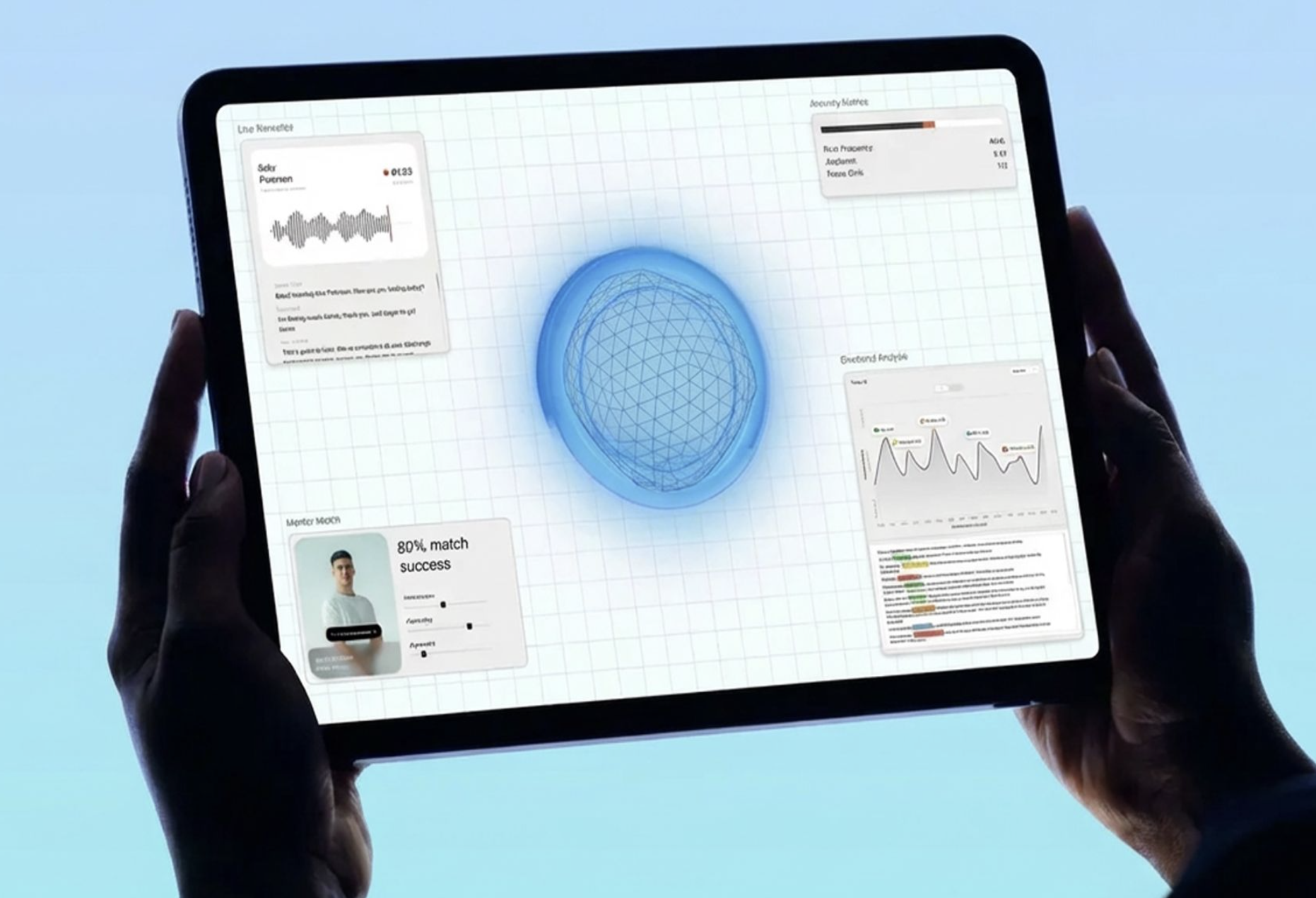
An EdTech startup approached Nester Labs with an ambitious vision: create an AI-powered voice mentor to help young professionals develop soft skills for corporate success. They needed a technical partner who could translate this vision into a production-ready platform.
Our team designed and built the complete system from scratch -including the conversational AI engine, real-time voice pipeline, psychographic assessment framework, adaptive curriculum system, and the AI avatar integration. The result is an empathetic AI mentor that delivers personalized coaching through natural multilingual conversations.
This case study details the technical challenges we solved and our approach to building emotionally intelligent AI at scale.
The Client's Challenge
The client identified a significant gap in the market: millions of talented graduates struggle with soft skills when entering corporate environments. Traditional solutions -executive coaches, corporate training, online courses -either cost too much, lack personalization, or don't provide real practice opportunities.
The vision was to democratize access to quality mentorship through AI. But bringing this to life required solving several complex technical problems:
| Challenge | Technical Requirement |
|---|---|
| Ultra-Low Latency | Complete voice turn (STT → LLM → TTS) within 1.5 seconds despite system complexity |
| Natural Voice Interaction | Real-time conversations that feel human, not robotic |
| Hinglish Language Support | Code-switching between English and Hindi mid-sentence |
| Emotional Intelligence | Detect user sentiment and adapt responses accordingly |
| Deep Personalization | Remember context across sessions and tailor coaching |
| Scalable Architecture | Support thousands of concurrent voice sessions |
| Cultural Authenticity | AI persona that resonates with the target demographic |
Our Solution
We approached this project as a full product development engagement, working closely with the client's team from initial architecture through production deployment. Here's how we tackled each major component:
1. Real-Time Voice Pipeline with 1.5s Latency Target
The Problem: Voice AI requires extremely low latency to feel natural. Despite the complexity of our system -speech recognition, LLM inference, emotion detection, personalization, and speech synthesis -the complete turn had to finish within 1.5 seconds. Any longer and conversations feel sluggish; users lose engagement.
Our Approach: We architected an aggressive streaming pipeline that processes all components in parallel rather than sequentially. Every millisecond mattered:
- Streaming STT with early finalization: Start LLM inference on interim transcripts before user finishes speaking
- Token-level TTS streaming: Begin audio synthesis as soon as the first LLM tokens arrive, not after complete response
- Parallel context injection: Load user profile, memory, and curriculum state asynchronously during STT phase
- Optimized prompt engineering: Compact system prompts that maintain quality while reducing token count
- Connection pooling and warm instances: Eliminate cold-start delays across all services
Result: Consistent sub-1.5 second turn completion, making the AI mentor feel responsive and natural even with all the intelligence running under the hood.
2. Multilingual Language Processing
The Problem: The target users communicate in multiple languages, often code-switching mid-sentence. Standard NLP models struggle with this pattern.
Our Approach: We developed a specialized prompt engineering framework and fine-tuned the voice models to handle multilingual conversations naturally:
- Custom STT configuration optimized for code-switching between languages
- Multi-layer prompt system that maintains natural language mixing
- TTS voice selection and tuning for natural multilingual prosody
- Cultural context injection for appropriate expressions
Result: Conversations that sound natural to native speakers, not like translated content.
3. AI Persona Design
The Problem: Generic AI assistants don't build the trust and emotional connection needed for effective mentorship.
Our Approach: Based on user research with the target demographic, we designed the AI mentor as a relatable figure -someone who understands the user's journey and genuinely cares. We implemented:
- Detailed persona framework with backstory, communication style, and values
- Empathy-first response patterns: listen, validate, share, guide, celebrate
- Consistent personality traits across all interaction types
- Lip-synced AI avatar integration for visual engagement
Result: Users report feeling "heard and supported" -not like they're talking to a bot.
4. Personalization & Progress Tracking
The Problem: One-size-fits-all approaches don't work for personal development. Users need experiences tailored to their individual profile and measurable progress toward goals.
Our Approach: We built systems to understand each user's psychographic profile and track their journey through structured learning paths. The AI adapts its interaction style based on user attributes, while a milestone-based progression system provides clear markers of growth and achievement.
Result: Personalized experiences with visible progress that keeps users engaged and motivated.
5. Memory & Context System
The Problem: Mentorship requires continuity -the AI needs to remember past conversations and build on them.
Our Approach: We implemented a sophisticated memory system that maintains:
- Long-term user profile and progress data
- Session-level conversation context
- Key moments and breakthroughs to reference later
- Emotional state tracking across sessions
Result: Conversations that feel continuous -the AI mentor remembers what users shared and follows up naturally.
System Architecture
We designed a multi-layered architecture optimized for real-time voice interactions at scale. The system integrates voice processing, LLM orchestration, personalization engines, and memory systems to deliver seamless, low-latency conversations while maintaining emotional intelligence and cultural authenticity.
| Layer | Components We Built |
|---|---|
| Conversation | Streaming STT, Voice Activity Detection, TTS Engine, Avatar Sync |
| Intelligence | LLM Orchestration, Prompt Engine, Emotion Detection, Response Generation |
| Personalization | User Profiling, Preference Learning, Adaptive Content Delivery, Memory Store |
| Infrastructure | WebSocket Management, Session Handling, Analytics Pipeline, Monitoring |
Technical Outcomes
| Metric | Achievement |
|---|---|
| Voice Latency | < 1.5s end-to-end turn completion (STT → LLM → TTS) |
| System Uptime | 99.9% availability |
| Personalization Depth | Multi-layer adaptive prompt system |
| Language Accuracy | Native-quality Hinglish generation |
| Concurrent Sessions | Scaled to support thousands of simultaneous users |
Business Impact
- Market Differentiation: First-of-its-kind emotionally-intelligent voice mentor in the EdTech space
- Scalable Unit Economics: AI mentorship at a fraction of the cost of human coaches
- 24/7 Availability: Users can access support anytime, driving higher engagement
- Data Insights: Rich analytics on user challenges and skill gaps
- User Satisfaction: Users report feeling genuinely supported, not like they're talking to a bot
Technologies Used
Voice AI (Deepgram, ElevenLabs), LLM Orchestration (OpenAI, Custom Prompting), Real-time Communication (WebSockets, Pipecat), Avatar Integration, Cloud Infrastructure (AWS), Analytics Pipeline